
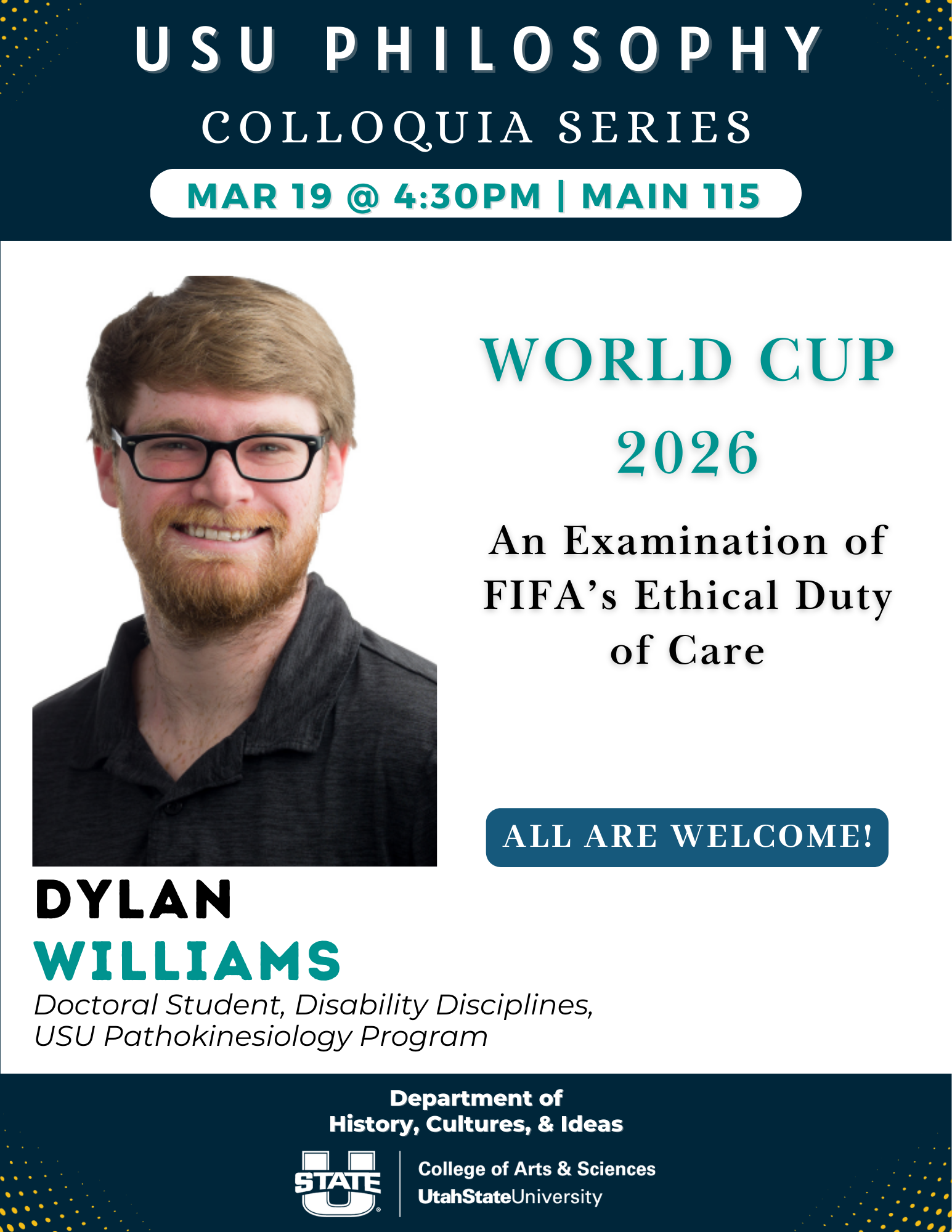
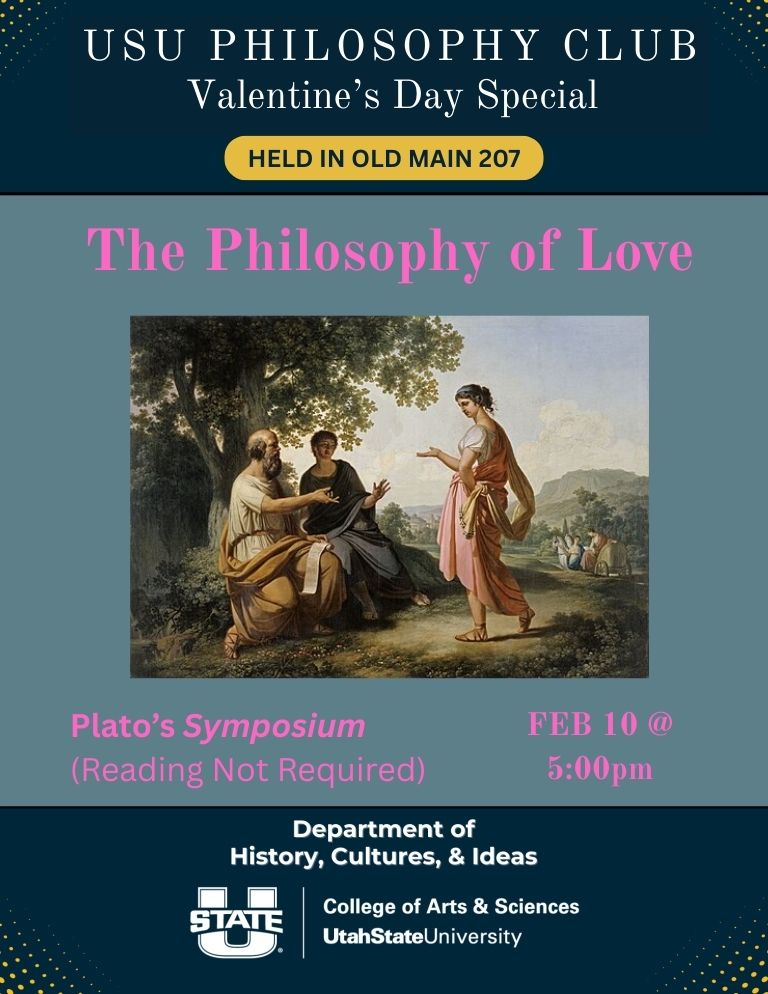
Hope to see you there! If you’re unable to attend in person, please consider joining us via Zoom:
Zoom link: https://usu.zoom.us/j/86265013277?pwd=Dfhua77vYVC52UCyd9S6JeRazMT45L.1
Meeting ID: 862 6501 3277
Passcode: 876915
Hope to see you there! If you’re unable to attend in person, please consider joining us via Zoom:
Zoom link: https://usu.zoom.us/j/86265013277?pwd=Dfhua77vYVC52UCyd9S6JeRazMT45L.1
Meeting ID: 862 6501 3277
Passcode: 876915
Join the USU Philosophy Club Reading Group for reflective discussions throughout the rest of the semester:
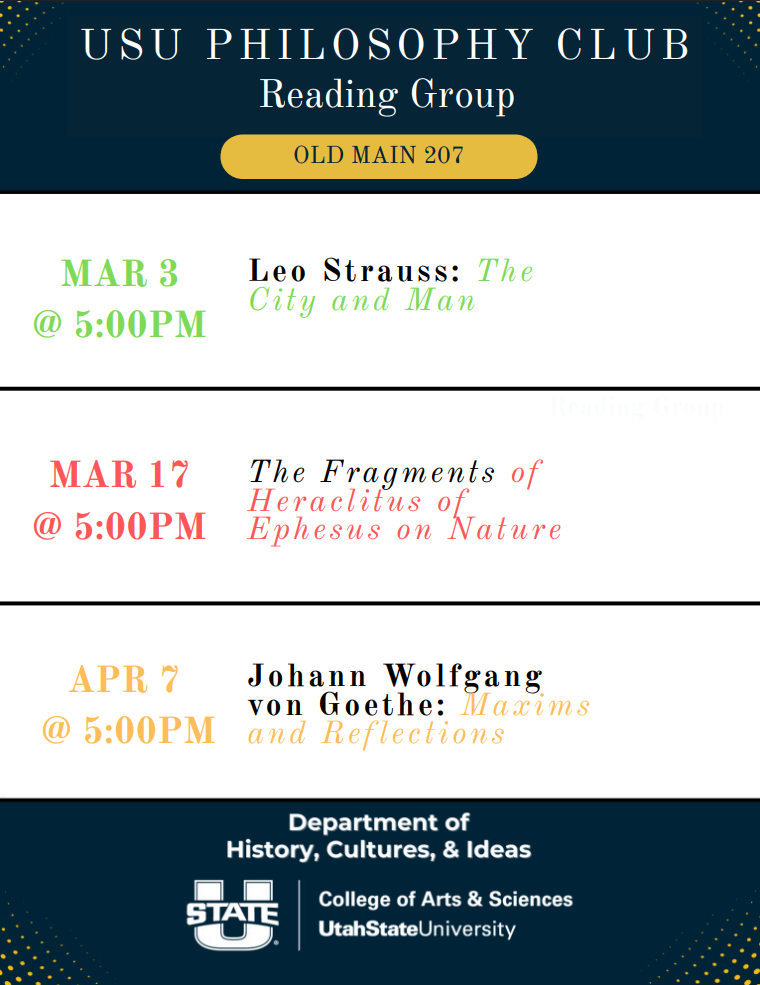
Readings available here:
Strauss: https://ia601703.us.archive.org/30/items/leo-strauss-the-city-and-man/Leo%20Strauss%20-%20The%20City%20and%20Man.pdf
Heraclitus: https://jujustoriesdotco.wordpress.com/wp-content/uploads/2017/09/heraclitus.pdf
Goethe: https://dn790003.ca.archive.org/0/items/maximsreflection00goetrich/maximsreflection00goetrich.pdf
Update: Join us in-person or via Zoom
Meeting ID: 898 5314 4343
Passcode: 709368
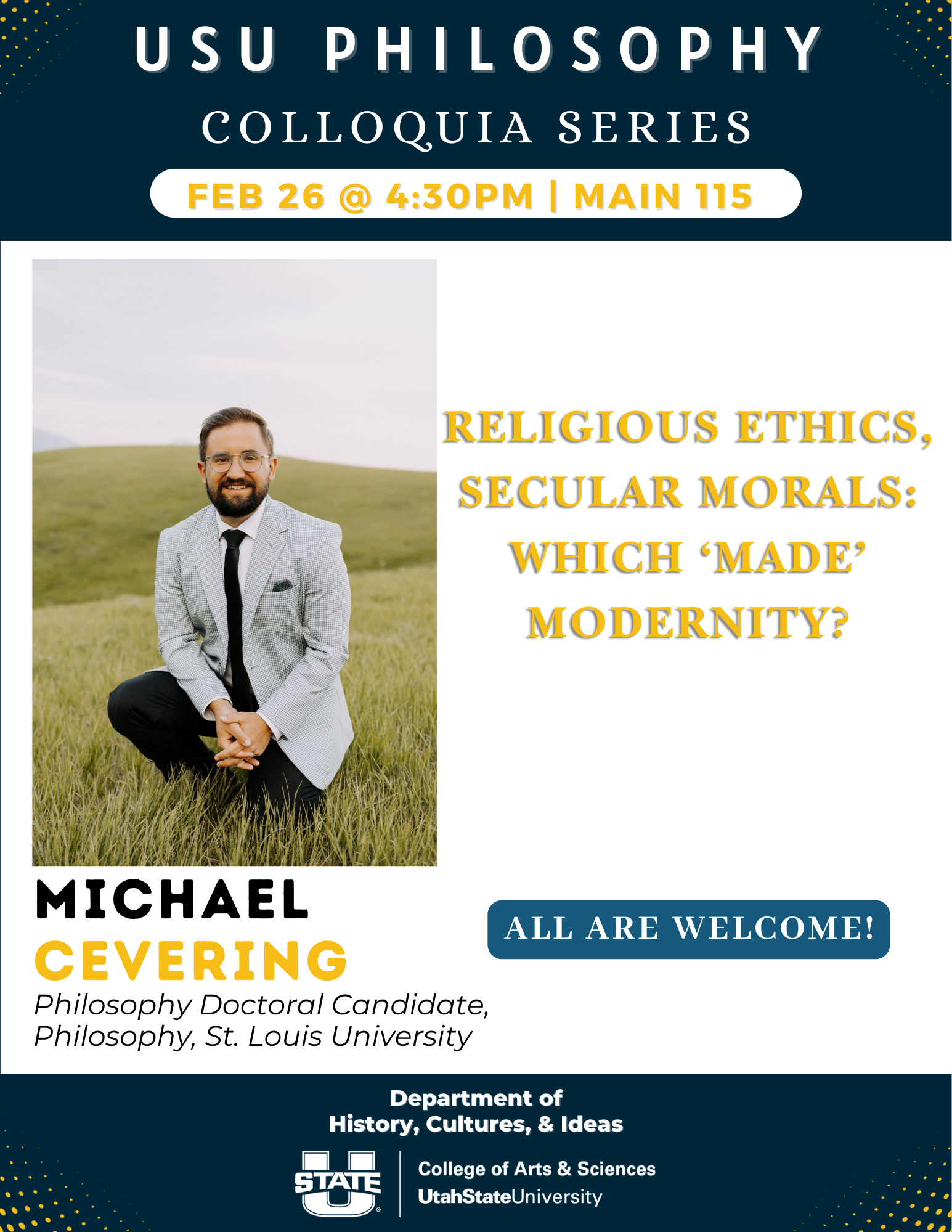
Abstract: Imagine two opposed groups of thinkers: one group insists that religious beliefs of a certain kind produced modern moral beliefs and practices; the other group protests that modern moral beliefs and practices are wholly divorced (and divorce-able) from religious beliefs and their influence. Furthermore, both groups believe that the world has improved morally, or will only improve morally, given that their respective position is true. If this imagined conflict seems familiar, that’s because it’s a conflict we encounter in online and public discourse. In this talk, I negotiate these groups’ differences and similarities by reflecting on the ways both groups contributed to concepts, values, and histories relevant to contemporary human rights discourse. As a result, I show that despite significant practical and theoretical differences, the ethical-moral perspectives we presently inhabit, such as those captured in rights discourse, have been historically shaped by religious and non-religious thought alike.
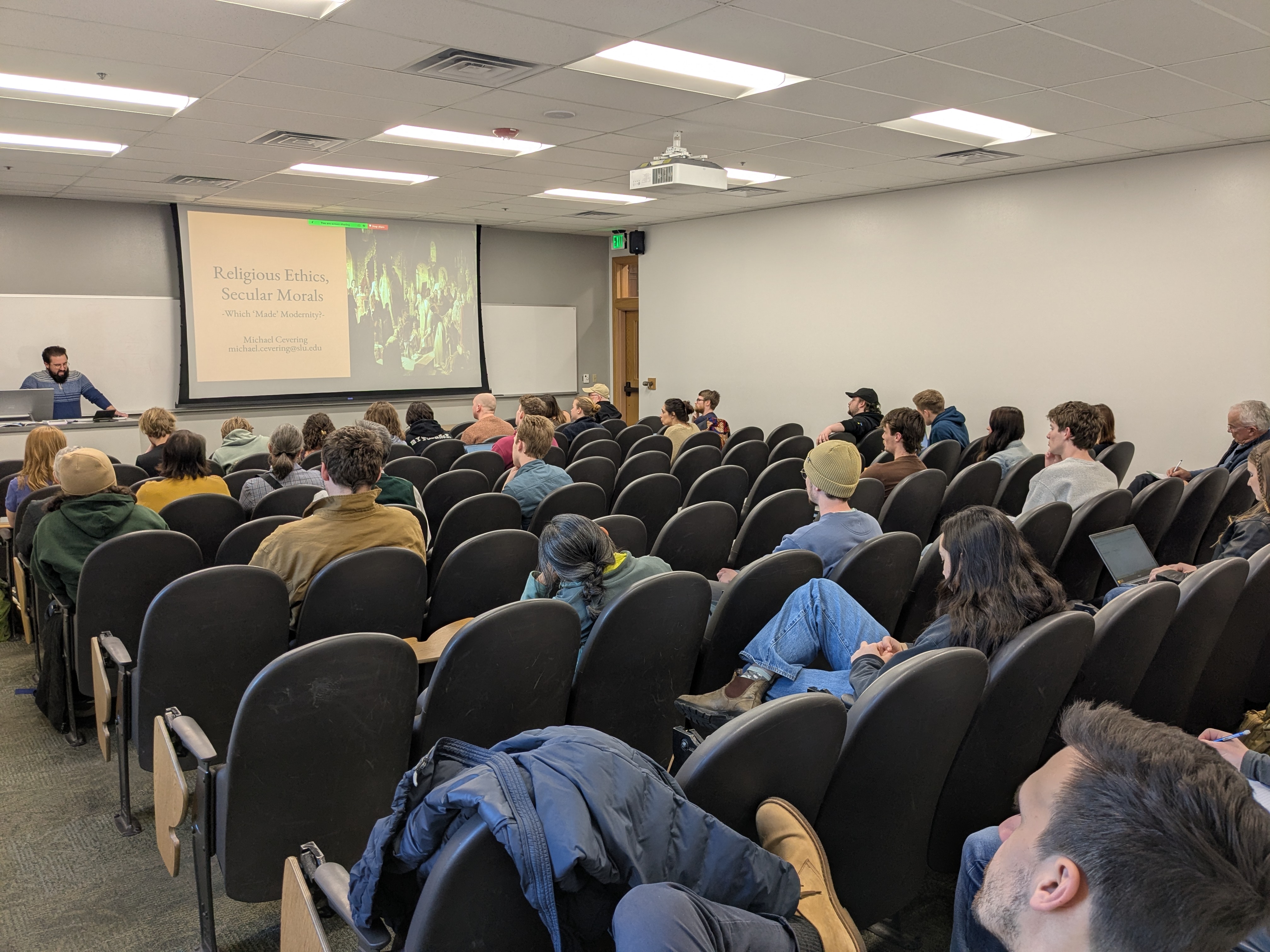
Update: We had another great turnout and an engaging Q&A. Thanks everyone!
Several of our colleagues in the Department of History, Cultures, & Ideas will be facilitating workshops at the Interfaith REPAIR workshop, Friday, March 6, 9am-5pm, at the First Presbyterian Church of Salt Lake City, 12 C St E.
5 free students tickets are available on a first come, first served basis. To request yours, email Dr. Ashfield. For more info, visit: https://www.waymakers.us/p/announcing-interfaith-repair
 USUPhilosophy