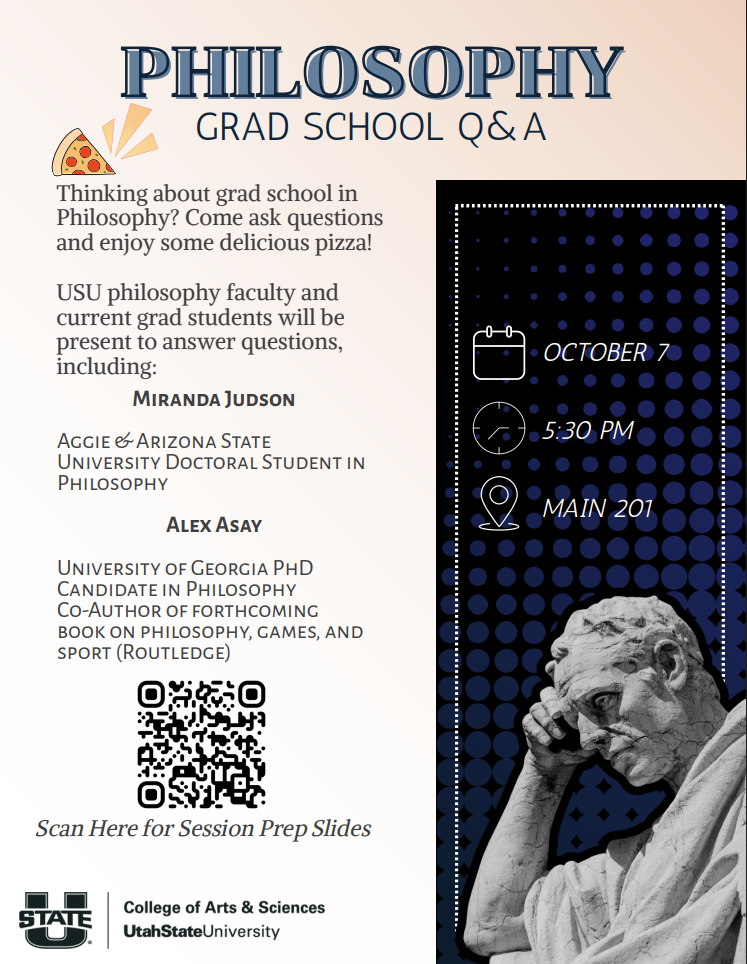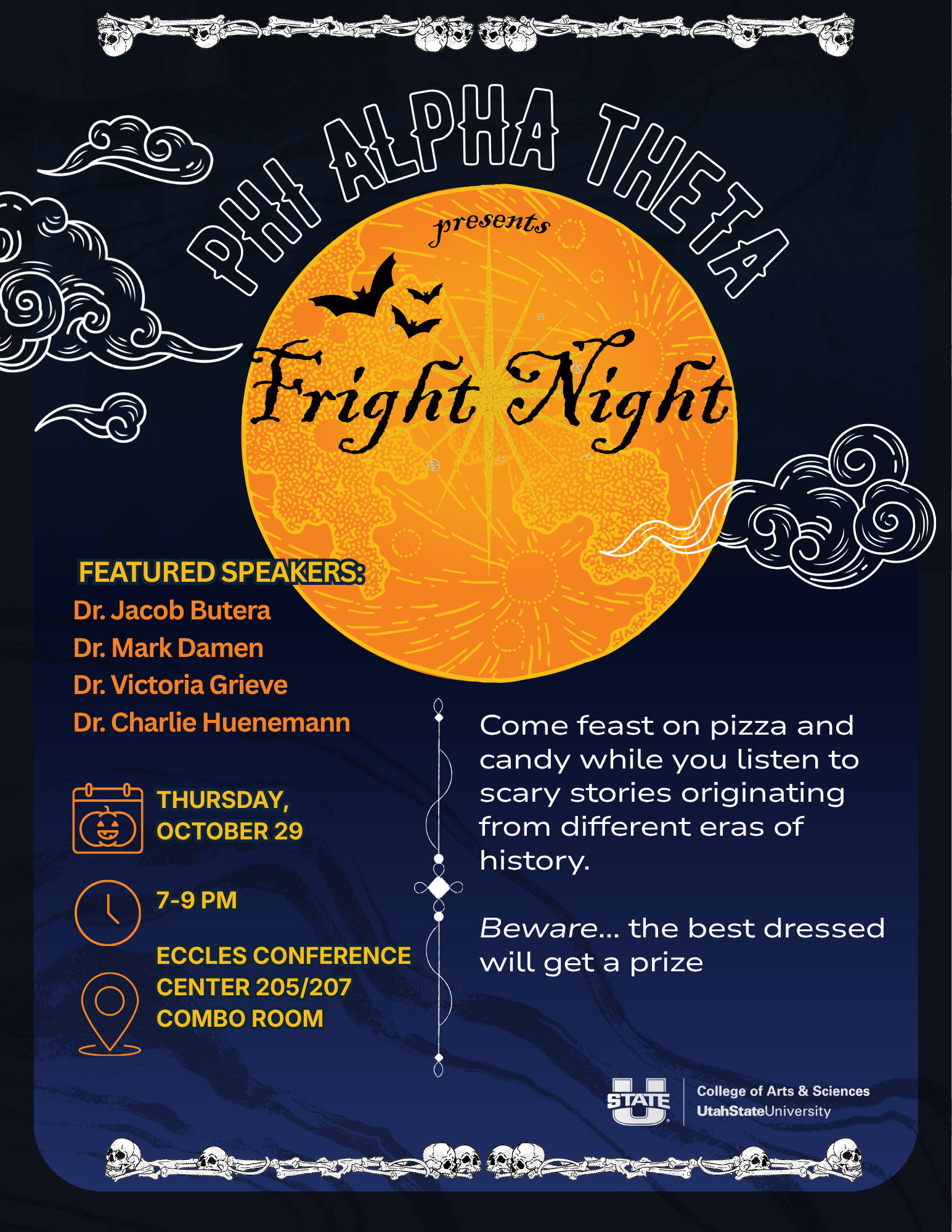
Next Public Philosophy Colloquium on Thursday, February 26 @ 4:30pm

Abstract: Imagine two opposed groups of thinkers: one group insists that religious beliefs of a certain kind produced modern moral beliefs and practices; the other group protests that modern moral beliefs and practices are wholly divorced (and divorce-able) from religious beliefs and their influence. Furthermore, both groups believe that the world has improved morally, or will only improve morally, given that their respective position is true. If this imagined conflict seems familiar, that’s because it’s a conflict we encounter in online and public discourse. In this talk, I negotiate these groups’ differences and similarities by reflecting on the ways both groups contributed to concepts, values, and histories relevant to contemporary human rights discourse. As a result, I show that despite significant practical and theoretical differences, the ethical-moral perspectives we presently inhabit, such as those captured in rights discourse, have been historically shaped by religious and non-religious thought alike.

Attention Phil Religion Students: 5 free student tickets available for “Interfaith REPAIR” peace-building workshop in SLC, March 6

Several of our colleagues in the Department of History, Cultures, & Ideas will be facilitating workshops at the Interfaith REPAIR workshop, Friday, March 6, 9am-5pm, at the First Presbyterian Church of Salt Lake City, 12 C St E.

5 free students tickets are available on a first come, first served basis. To request yours, email Dr. Ashfield. For more info, visit: https://www.waymakers.us/p/announcing-interfaith-repair

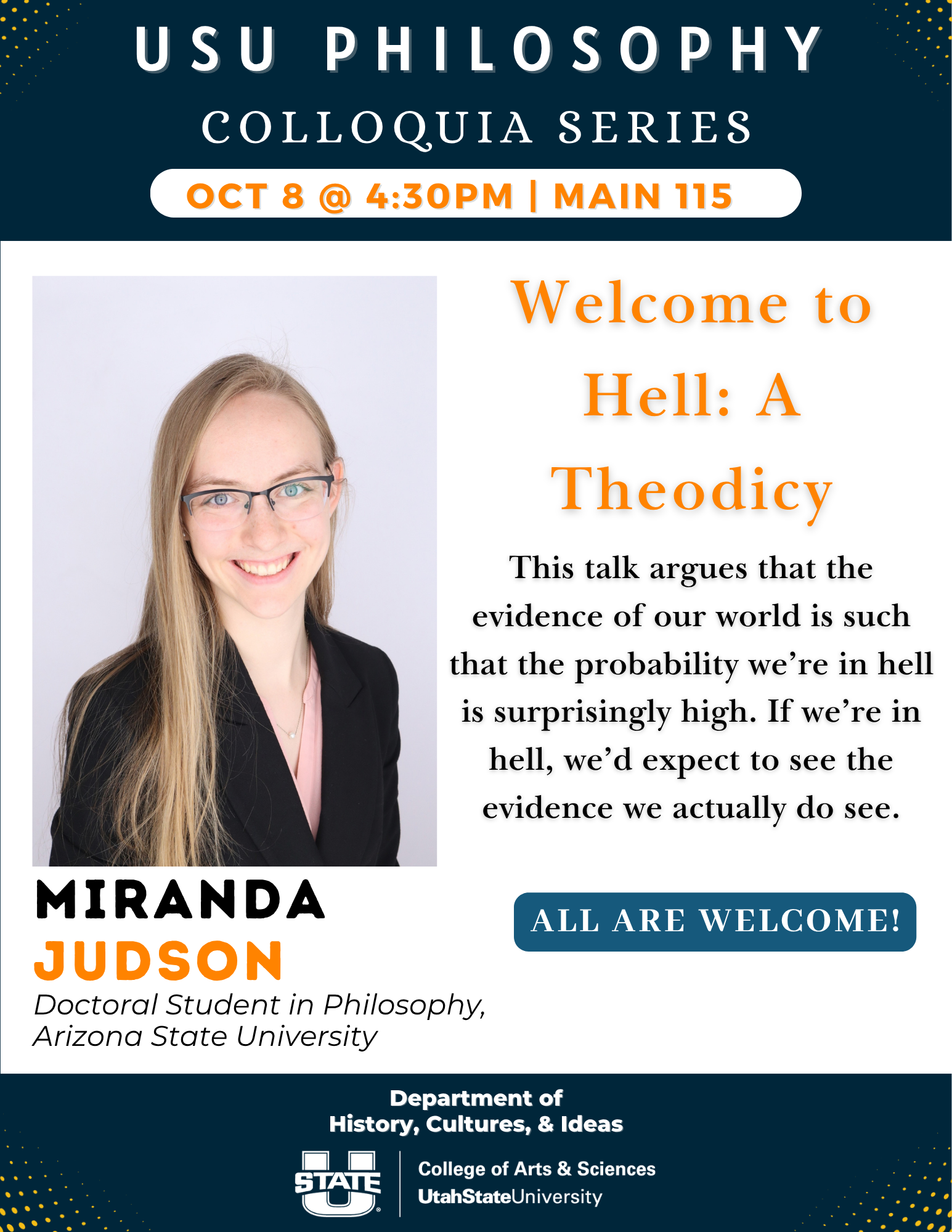
Public Philosophy Colloquium next Thursday, January 29 @ 4:30pm

Update: Feel free to join this afternoon’s colloquium via Zoom
Meeting ID: 843 7408 7165
Passcode: 614125

Abstract: What is a god? What is non-theistic or minor godhood? In this sequel to Dr. Ashfield’s December 2024 colloquium on bare theism and LDS theology, he will explicate ‘deitism’ to designate the commitment shared by all who countenance the existence of gods of limited rather than ultimate power, or local rather than global explanatory significance, but not those rejecting the existence of god(s) in favor of ultimate beings (i.e., God), other supernatural, holy, or transcendent entities (e.g., ghosts, holy texts, eternal vocables), nor those rejecting all of the above.

A successful explication of deitism’s commitments should (1) make them distinguishable from expressly non-deitistic positions (e.g., pure atheism, pure animism, pure theism, etc.), (2) identify something common to many paradigmatic deitistic positions, while minimizing dependence on philosophical parochialisms, and (3) not obscure (but ideally clarify) what’s at stake in debates about a given tradition’s (non)theism. 

So, after considering alternative definitions of non-theistic godhood suggested by Michael Levine (1994), Vijay Ramnarace (2023), and Purushottama Bilimoria (2024), Ashfield will defend an explication of ‘deitism’ in terms of agential contingent transcendence, on which a non-theistic deity is an agential being that contingently transcends the natural order in some respect. After illustrating and defending the implications of agential contingent transcendence, including its implication for LDS theology, he will argue that it satisfies desiderata (1), (2), and (3) better than the alternatives.

Audience Q&A will follow. We hope to see you there!