
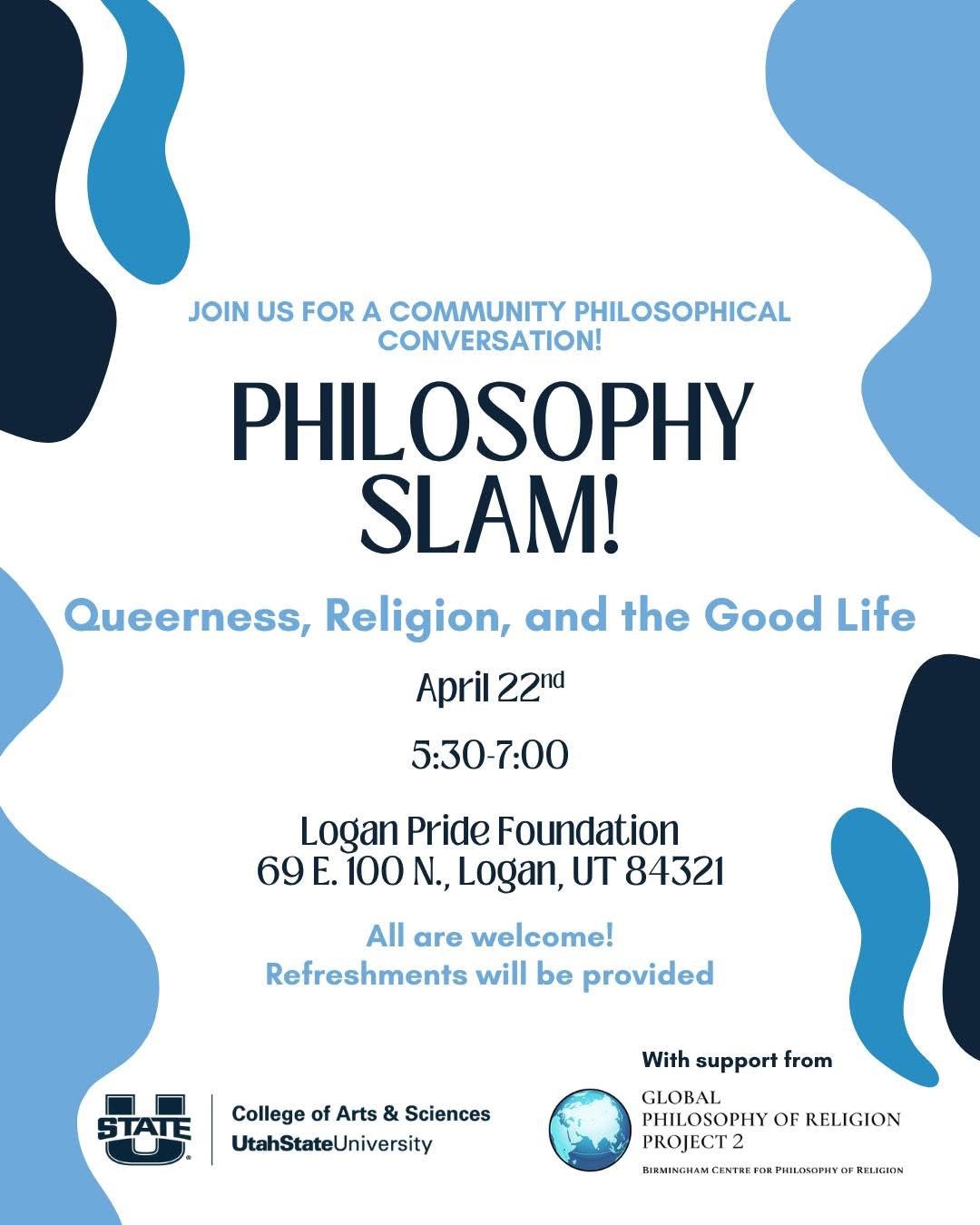
All are welcome! Refreshments provided! Hope to see you there!
All are welcome! Refreshments provided! Hope to see you there!
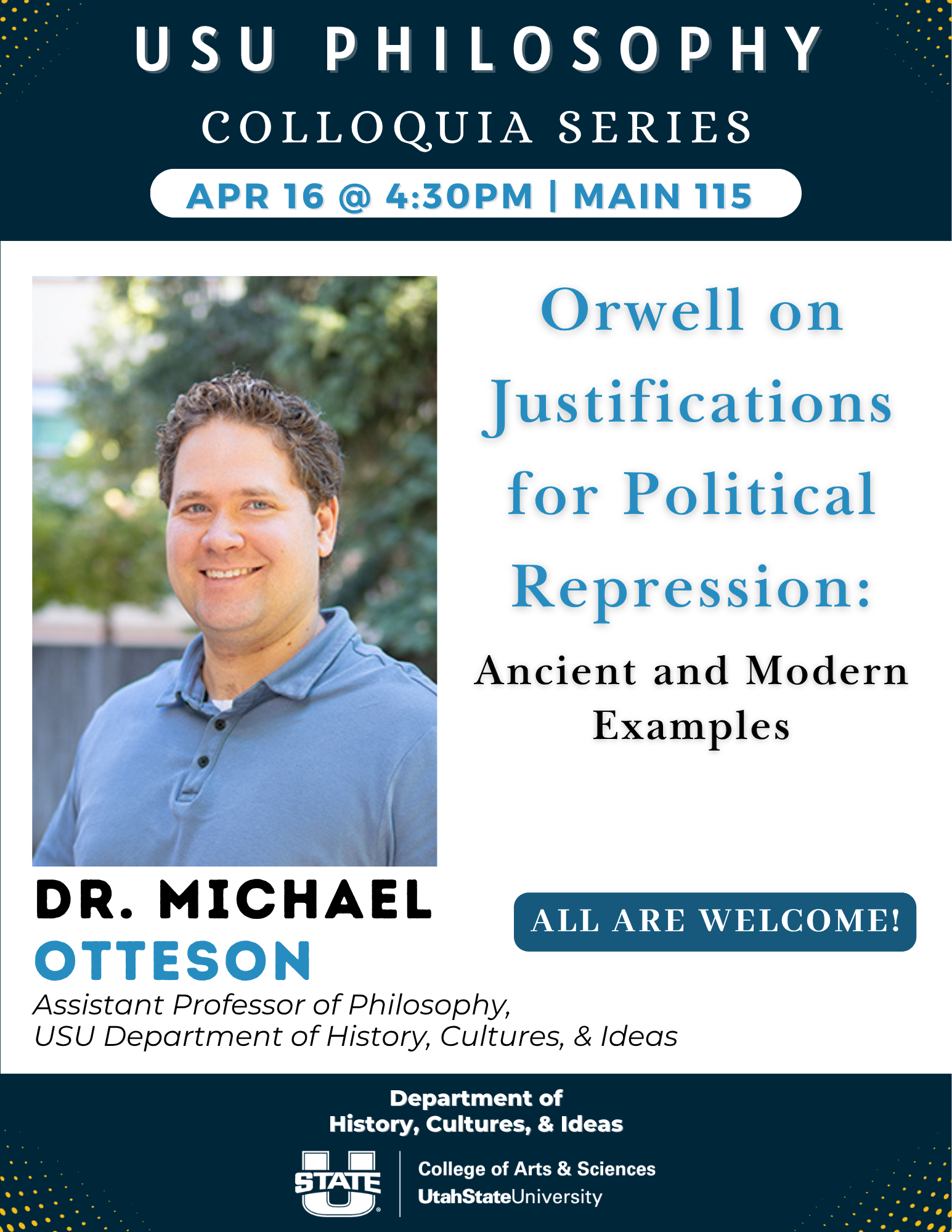
Dr. Michael Otteson will present “Orwell on Political Justifications for Political Repression: Ancient and Modern Examples”
Zoom Meeting: https://usu.zoom.us/j/87865326387?pwd=Hmbwzpl5zp6eelcoyuEG00H8QGUEBR.1
Meeting ID: 878 6532 6387
Passcode: 903944
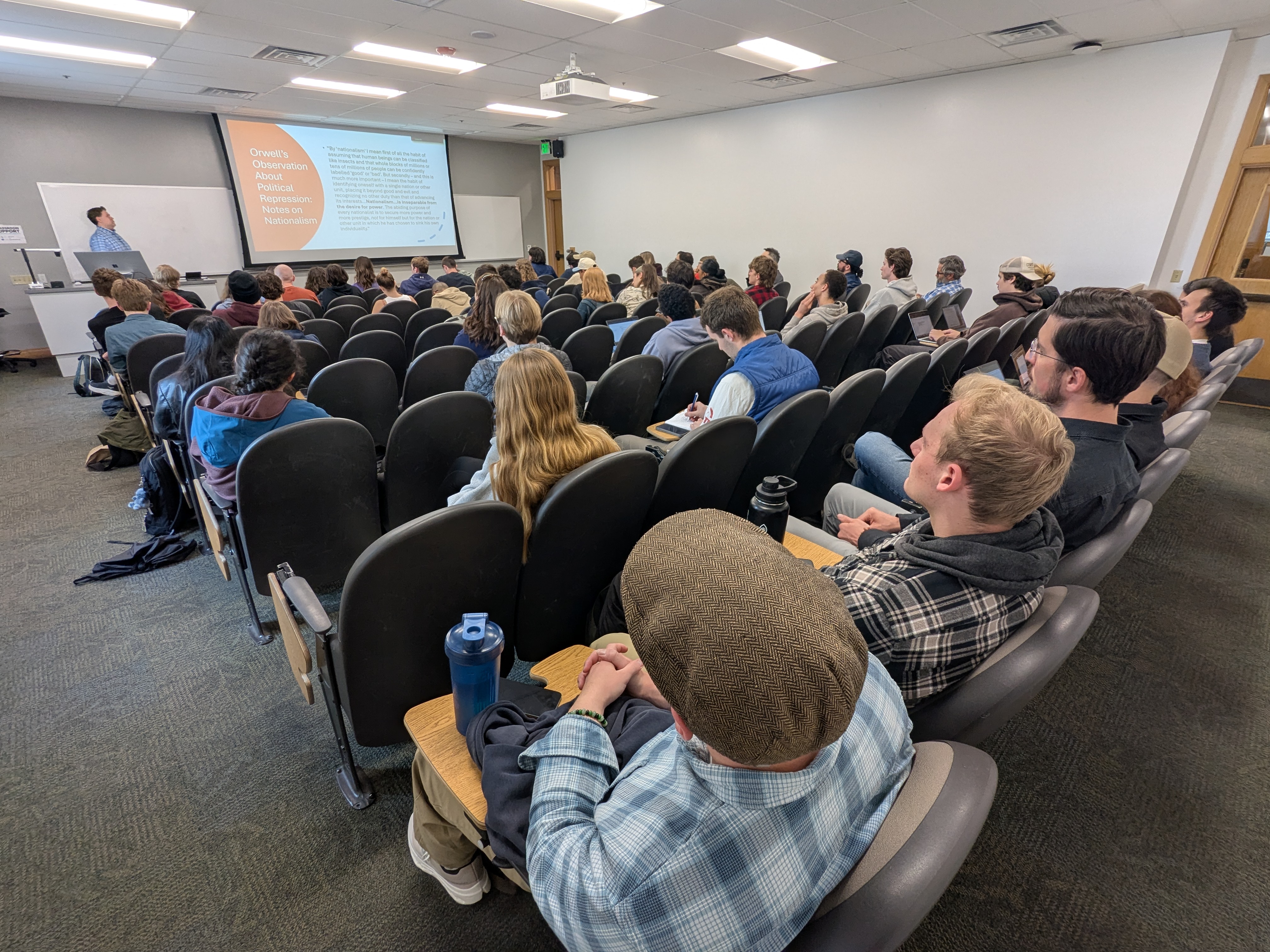
Update: We had another terrific turnout to close out the 2025-26 USU Public Philosophy Colloquium series. Thank you to everyone who joined us this year. We look forward to seeing you this Fall!
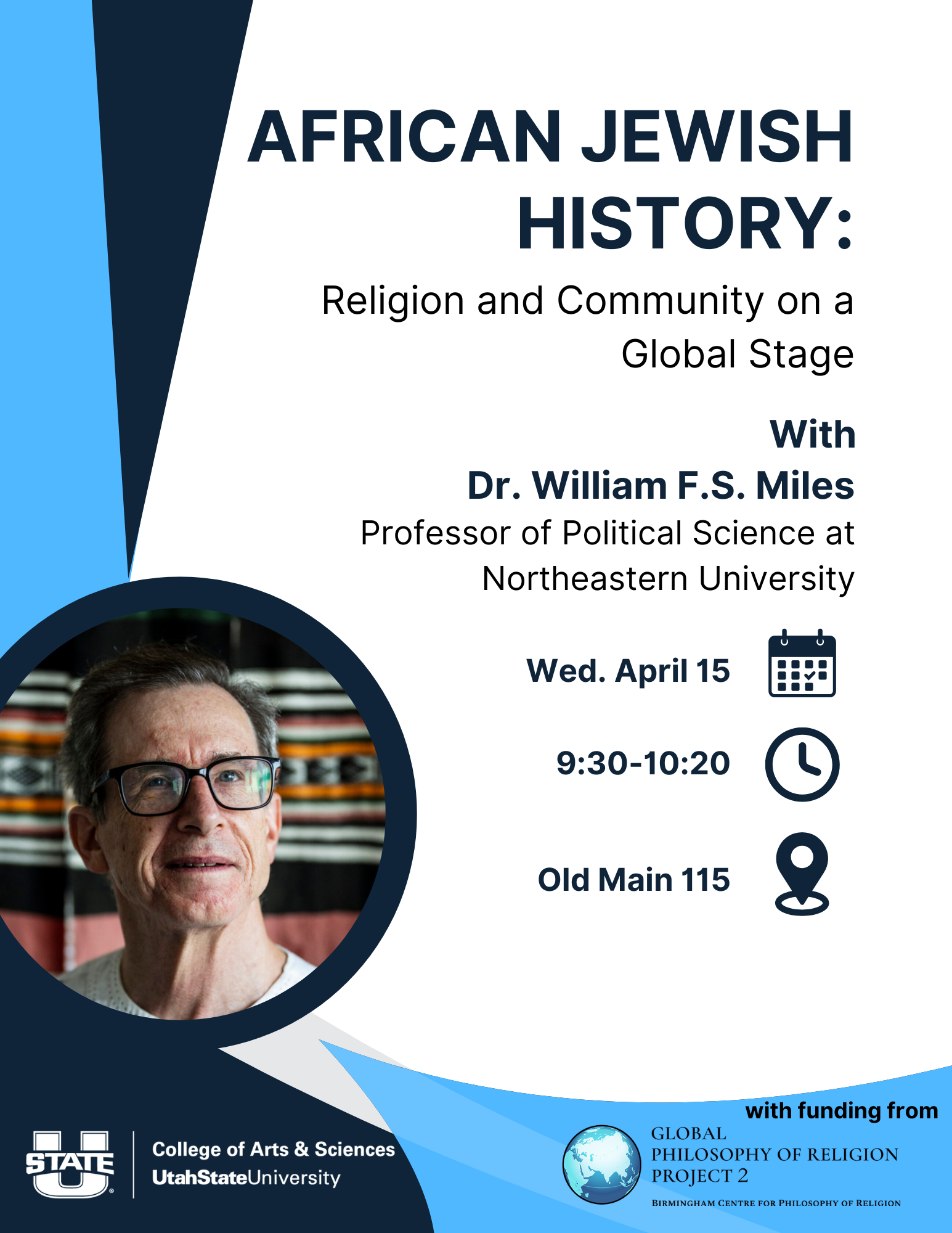
This event is funded with the generous support of a private donation. Additional support is provided thanks to a Public Engagement & Impact Grant from the Global Philosophy of Religion Project 2 (GPR-2).
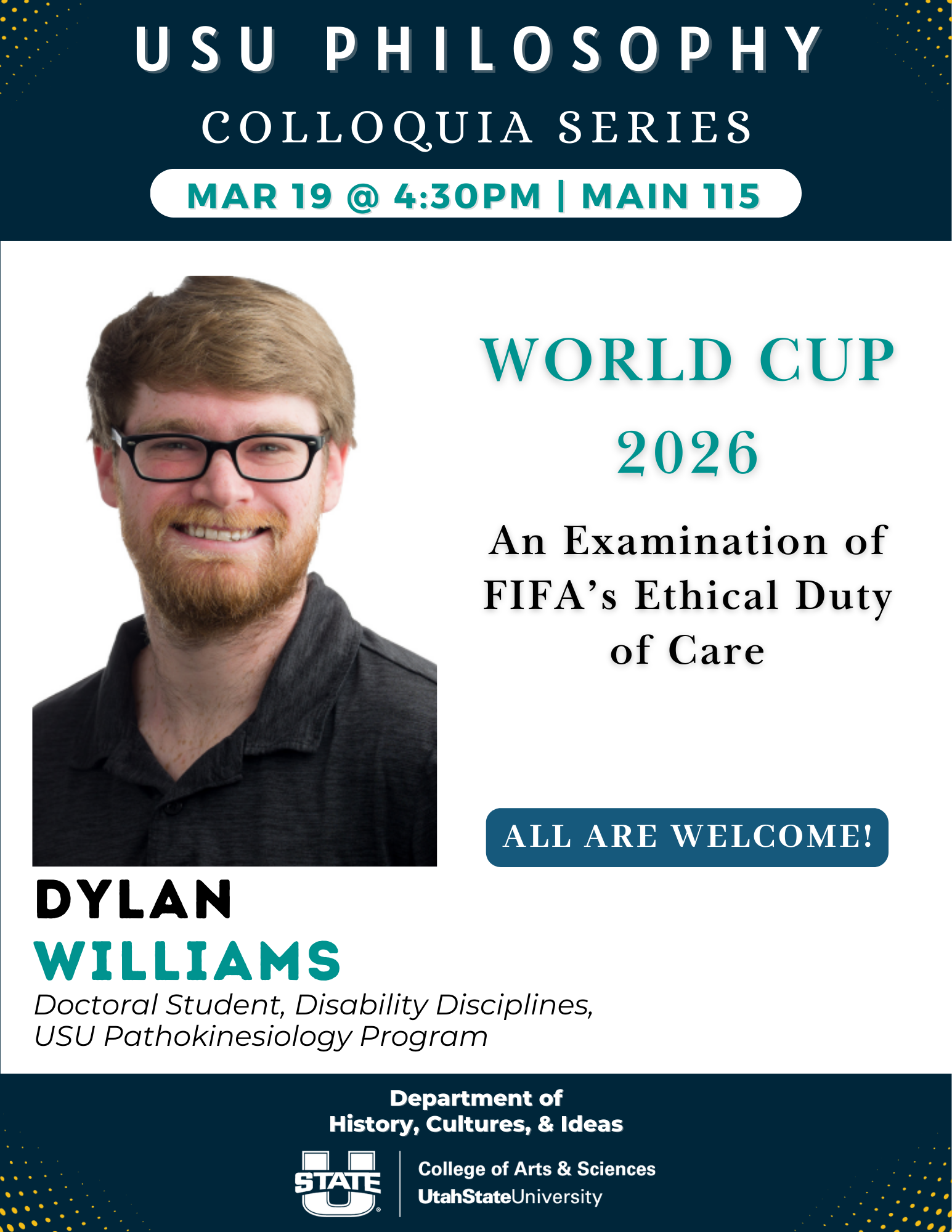
Hope to see you there! If you’re unable to attend in person, please consider joining us via Zoom:
Zoom link: https://usu.zoom.us/j/86265013277?pwd=Dfhua77vYVC52UCyd9S6JeRazMT45L.1
Meeting ID: 862 6501 3277
Passcode: 876915
Join the USU Philosophy Club Reading Group for reflective discussions throughout the rest of the semester:
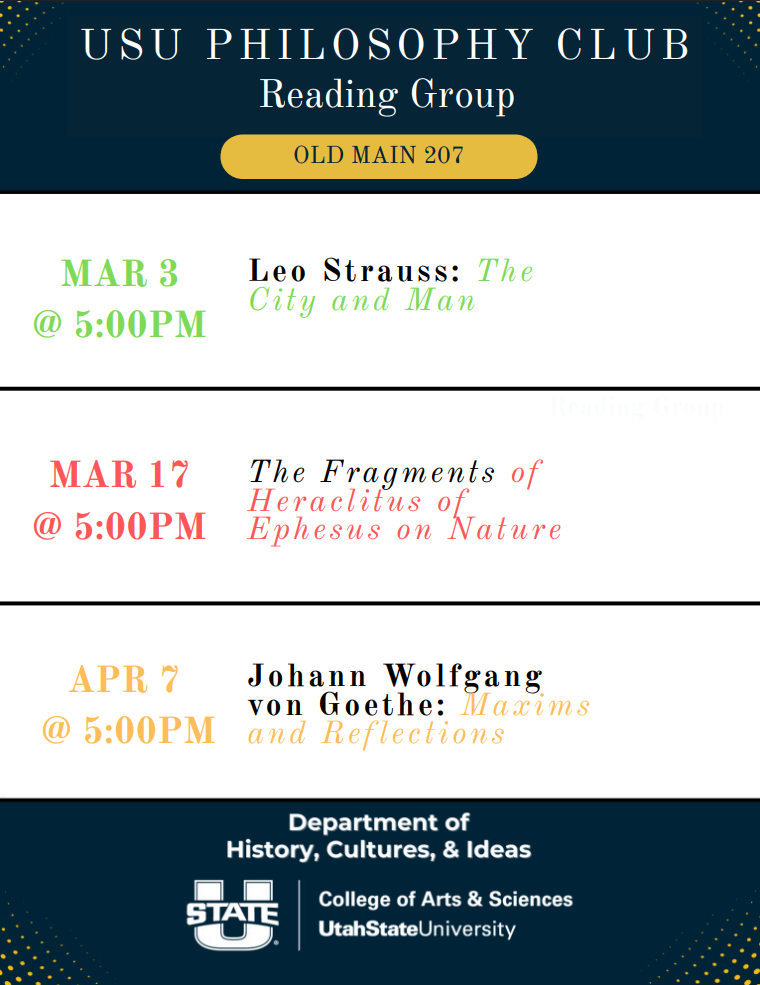
Readings available here:
Strauss: https://ia601703.us.archive.org/30/items/leo-strauss-the-city-and-man/Leo%20Strauss%20-%20The%20City%20and%20Man.pdf
Heraclitus: https://jujustoriesdotco.wordpress.com/wp-content/uploads/2017/09/heraclitus.pdf
Goethe: https://dn790003.ca.archive.org/0/items/maximsreflection00goetrich/maximsreflection00goetrich.pdf

