
William Lane Craig (“Yes”) and Shelly Kagan (“No”) debated the question. There is a link to their debate and a good, on-going discussion of it over on Prosblogion. The blog’s discussion is really quite impressive; my experience is that very often, after the first eight posts or so, comments on blogs usually lose track of the topic or become childishly snippy. (Not on any of my blogs, of course!) But this one maintains a decent level of focus and civility.
Category: Uncategorized
Congratulations, graduates!
 A belated congratulations to Philosophy majors and minors who graduated this term! Be well, best wishes to you, and please check in from time to time and let us know what you are doing.
The brain and perceptions of time
No doubt following our edition of The Philosophers’ Carnival, The New Yorker recently published an article on David Eagleman, a neuroscientist pursuing many mysteries, including the ways our brains/minds process time. It’s an interesting read.
Time is a dimension like any other, fixed and defined down to its tiniest increments: millennia to microseconds, aeons to quartz oscillations. Yet the data rarely matches our reality. The rapid eye movements in the mirror, known as saccades, aren’t the only things that get edited out. The jittery camera shake of everyday vision is similarly smoothed over, and our memories are often radically revised. What else are we missing? When Eagleman was a boy, his favorite joke had a turtle walking into a sheriff’s office. “I’ve just been attacked by three snails!” he shouts. “Tell me what happened,” the sheriff replies. The turtle shakes his head: “I don’t know, it all happened so fast.”
Welcome to Philosophers’ Carnival #124
We are happy to present this edition of The Philosophers’ Carnival. For the sake of convenience, we will split the posts we received into “Whether neuroscience explains mentality” (our proposed theme) and “Everything else”.
Whether neuroscience explains mentality
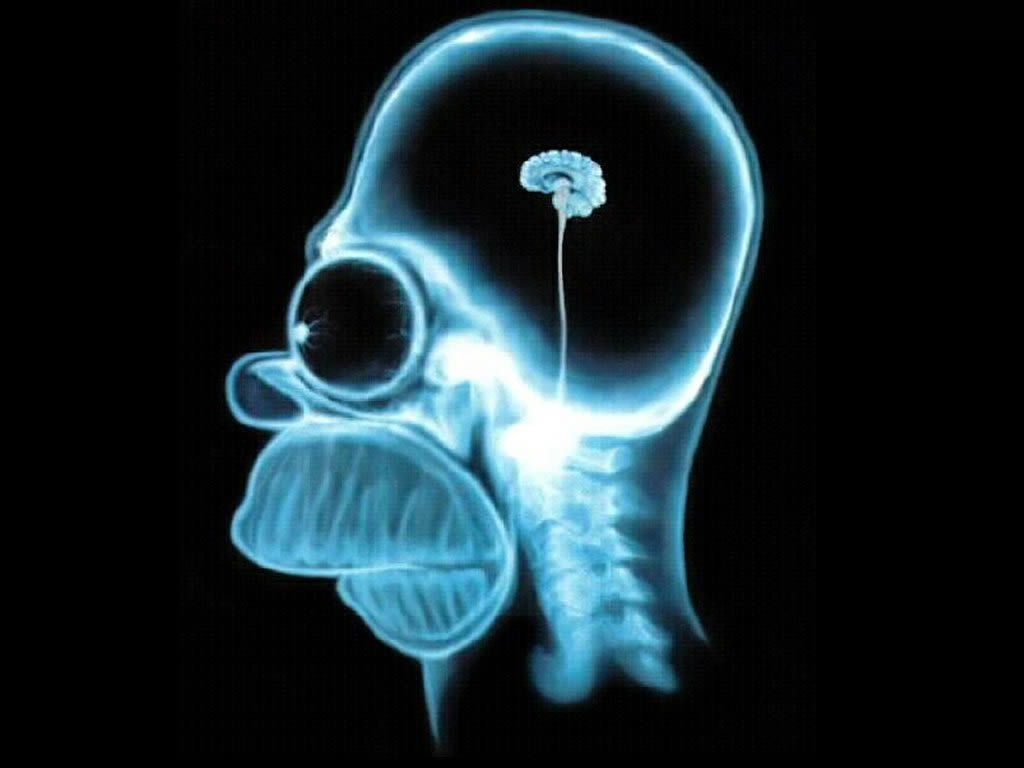 As neuroscientists discover more and more about how our brains work, there is always the danger of exaggerating what’s being explained. So, for example, consider this recent story from Science Daily, telling of a team that “found evidence that the flexibility of a person’s brain can be used to predict how well someone will learn.” They established these findings by using an MRI to watch the brains of 18 people as they pushed buttons as fast as possible. Or consider this other Science Daily story describing a team of scientists taking “an important step” toward understanding “how brain represents meaning” by predicting which areas of the brain would light up as a subject thinks of certain words. An important step? Maybe. But it sounds like some research results are being oversold here.
Some time ago on this blog we discussed Edward Feser’s take on “neurobabble,” where he argues that reductionistic materialist philosophies of mind go too far. We needn’t be forced into choosing between an inadequate material reduction and an implausible Cartesian dualism; we also have available Aristotle’s view, which maintains that certain abilities of the mind, like how we can grasp meanings, cannot be completely explained through mere neurology, but also don’t require a separate soul or even dualistic properties to get the work done. Hylomorphism, that’s the ticket.
On the Florida Student Philosophy Blog, Jared Smith offers an extended treatment of data suggesting that our brain is making choices before we know anything about it. The basic question is whether the neuroscientific activity is showing “preparatory” work prior to our decision making, or whether the activity is itself the decision making. Smith argues that “brain activity does not merely prepare for some sort of agent causal power but rather determines such behavior, all the while unbeknownst to the agent.” The brief comment exchange afterward is also interesting.
Glenn Peoples, on The Beretta Blog, challenges a curious argument for substance dualism that is rooted in neuroscience. The targeted argument is, basically, “You stimulated my brain and made by body do something I don’t take ownership of. Therefore I am not my brain.” Hmmm. Peoples provides a thoughtful critique of this argument and similar ones.
There also has been a fair amount of philosophical discussion of two recent books using neuroscience to explain mentality. In The New Humanist, Caspar Melville interviews Nick Humphrey about his book Soul Dust: the Magic of Consciousness (Quercus): “What looks like an attempt to validate spirituality using the language of science turns out to be a way to expand the domain of science by accounting for spirituality, and the soul, alongside consciousness in a fully materialist account.” Galen Strawson takes a considerably more critical approach toward Humphrey in his review of the book in The Guardian, and there’s a bit of a dust up between the two in the comments section. Similarly, Morgan Meis on The Smart Set offers a thoughtful review of V. S. Ramachandran’s The Tell-Tale Brain: A Neuroscientist’s Quest for What Makes Us Human (W. W. Norton). (But I have to admit, the business about seagull chicks and their mothers’ beaks doesn’t really help me to understand the appeal of abstract expressionism.) Neurophilosophy also features an interview with Ramachandran on his broken-mirror hypothesis and the neurological basis of autism.
Everything else
• Juan Gomez enlists Thomas Reid to caution us about the dangers of introspection, but leaves us with some hope: “The labyrinth may be too intricate, and the thread too fine, to be traced through all its windings; but, if we stop where we can trace it no farther, and secure the ground we have gained, there is no harm done; a quicker eye may in time trace it farther.”
• Michael S. Pearl on The Kindly Ones argues that, Stephen Hawkin’s recent claims notwithstanding, the cosmological argument still holds some promise. He argues that our current view of causality comes up short, especially as it pertains to the first cause. In order for us to consider the cosmological argument, we need first to grasp how causality works in Hawking’s theories, and then to see how and whether a first and uncaused event is possible.
• On The Space of Reasons, Avery Archer (following Anscombe) suggests that we view intentions as aiming toward the good in the same way that beliefs aim toward the true; and furthermore, that desires are good to the extent they prompt intentions toward the good, just as perceptions are correct to the extent that they prompt belief in the true.
The Philosophers’ Carnival is on the lookout for future hosts. To see what’s involved, and the guidelines, please click here.
Great colloquium!
 Just a word of appreciation to all those who participated in yesterday’s colloquium. It was gratifying to see so many friends, faculty, and students turn out to cheer on the presenters. And each presenter did a fine job – I know many of you were a bit nervous, but you each really did well in covering difficult material and fielding pesky questions and objections. Truly impressive!

