The Experience Machine

(from dvara.net)
(from dvara.net)
Each day I am sent a short essay from a source called “Caesura Letters.” The one today is by James Shelley, and it may be of general interest:

“American philosopher Robert Nozick (1938-2002) presented the following thought experiment:
Suppose there were an experience machine that would give you any experience you desired. Superduper neuropsychologists could stimulate your brain so that you would think and feel you were writing a great novel, or making a friend, or reading an interesting book. All the time you would be floating in a tank, with electrodes attached to your brain. (Nozick 1974:42)

Nozick imagined that the experience machine would be something that you could plug into for two years at a time. During each two year session you might live the experiences of great, legendary figures, or any kind of scenario that could be programmed. After each two year cycle in the experience machine, you would wake up, spend a few hours out of the tank, and then plug in for another two years. Each time you were plugged in, you would not be aware of the simulation — it would all feel like it is actually happening. And, importantly, anyone else could plug in to experience machines as well, so there would be no need to stay unplugged to tend to the needs of others.

Would you plug in?

Nozick believes that if such a machine existed, most people would refuse to use it.
First, he says, we want to do certain things, not just have the experience of doing them. The experience of living a great life is ultimately meaningless if we just wake up every two years to realize that none of it actually happened.

Secondly, we each want to be a certain kind of person. The experience machines nullifies our identity, and with it, any innate sense of value we might have. A person plugged into the machine, floating there in the tank, is only “an indeterminate blob” — no longer a kind, intelligent, or loving person. “Plugging into the machine is a kind of suicide.” (Ibid 43)

Thirdly, Nozick points out that the experience machine limits us to a “man-made reality, to a world no deeper or more important than which people can construct.” (Ibid)
Nozick’s argument is that experience itself, if divorced from everything else, is hollow and empty. Bliss, as an end in itself, ultimately adds nothing of value to existence. Experience seems to matter to the extent that it actually happens and results in changes in the real world. If we choose not to be plugged into the experience machine, it would suggest that something is more important to us than how our lives feel from the inside.
In other words, perhaps our greatest concern is who and what we are, not simply whether or not we happen to feel good.”
On various kinds of teleology

Teleology – which some might define as “the (allegedly) goal-directed behavior of natural beings” – is in fact a family of different kinds of takes on explaining natural phenomena. It rarely receives the patient and open-minded treatment it deserves. But I’m happy to report an exception – this article, by Stephen T. Asma, which defends a plausible view of the importance of teleology in explaining biological phenomena, and “why there will never be a Newton of biology”. Relevant excerpt:

Aboutness in nature doesn’t need to be superadded. It’s already everywhere, but our mechanical paradigm of nature and our Cartesian biases oblige us to ignore it. Goal directed behavior is not just in neo-cortical representational consciousness, but in subcortical SEEKING systems and nonrepresentational latent action patterns. Philosophers like Nagel and Arnold think we don’t have meaning without reasons, but we do. We have intentionality in high degrees, even before we have language. Not only is the body intentionally oriented to other bodies, but many of our own mental events are also prelinguistic projects.

Studying the purposes of history with Professor Nietzsche

Alex Tarbet is putting together a group to read Nietzsche’s early essay, “On the Advantage and Disadvantage of History for Life.” This is a tremendous essay: brilliant, sweeping, passionate, perceptive, and possibly life-changing. As Tarbet writes:

Why study history? Can humanistic education actually be a bad thing? This short, explosive critique of academic culture is among Nietzsche’s early writings as a professor. Whether it is still relevant to today’s students – or ought to become history itself – is one of the questions we will ask in several discussions and a panel at the end of the semester. Everybody is welcome, not just philosophers! (You don’t have to participate in the panel if you don’t want to.) Send an email to al.tarb [at] aggiemail.usu.edu and we will work around everyone’s schedules from there.

Flash! philosophy events for spring

Royal_Institution_-_Humphry_Davy

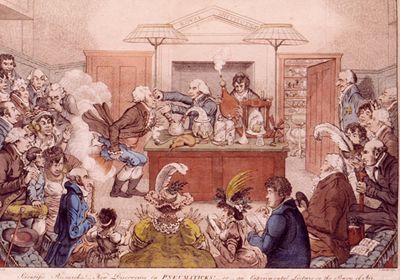
We have decided to schedule three Flash! philosophy events for this semester. Think of these as fun and possibly irreverent mini conferences. Students are encouraged to give a ten-minute presentation on some idea, which could range from profound to silly. Past presentations have included “The Teleology of Beard Growing”, “Categorical Randomness”, “Farts: A Transcendental Inquiry”, and “The Phenomenology of the Cool”. Or you can come just to listen and make goofy comments. If you have an idea you wish to present, please send along a title at least three days in advance to justin_solum [at] yahoo.com, or to charlie.huenemann [at] usu.edu.

The scheduled dates and places are as follows:

Wed Jan 29         Main 006             5:00 – 6:30
Tues Feb 18         Main 006             5:00 – 6:30
Thur Mar 27        Main 207             4:30 – 6:00