
Just a reminder that we’re 5 days away from the next one. Send in your topics! Details here.
Author: Huenemann
On various kinds of teleology
Teleology – which some might define as “the (allegedly) goal-directed behavior of natural beings” – is in fact a family of different kinds of takes on explaining natural phenomena. It rarely receives the patient and open-minded treatment it deserves. But I’m happy to report an exception – this article, by Stephen T. Asma, which defends a plausible view of the importance of teleology in explaining biological phenomena, and “why there will never be a Newton of biology”. Relevant excerpt:
Aboutness in nature doesn’t need to be superadded. It’s already everywhere, but our mechanical paradigm of nature and our Cartesian biases oblige us to ignore it. Goal directed behavior is not just in neo-cortical representational consciousness, but in subcortical SEEKING systems and nonrepresentational latent action patterns. Philosophers like Nagel and Arnold think we don’t have meaning without reasons, but we do. We have intentionality in high degrees, even before we have language. Not only is the body intentionally oriented to other bodies, but many of our own mental events are also prelinguistic projects.
Studying the purposes of history with Professor Nietzsche
Alex Tarbet is putting together a group to read Nietzsche’s early essay, “On the Advantage and Disadvantage of History for Life.” This is a tremendous essay: brilliant, sweeping, passionate, perceptive, and possibly life-changing. As Tarbet writes:
Why study history? Can humanistic education actually be a bad thing? This short, explosive critique of academic culture is among Nietzsche’s early writings as a professor. Whether it is still relevant to today’s students – or ought to become history itself – is one of the questions we will ask in several discussions and a panel at the end of the semester. Everybody is welcome, not just philosophers! (You don’t have to participate in the panel if you don’t want to.) Send an email to al.tarb [at] aggiemail.usu.edu and we will work around everyone’s schedules from there.
Flash! philosophy events for spring
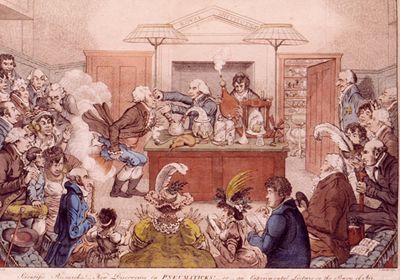
We have decided to schedule three Flash! philosophy events for this semester. Think of these as fun and possibly irreverent mini conferences. Students are encouraged to give a ten-minute presentation on some idea, which could range from profound to silly. Past presentations have included “The Teleology of Beard Growing”, “Categorical Randomness”, “Farts: A Transcendental Inquiry”, and “The Phenomenology of the Cool”. Or you can come just to listen and make goofy comments. If you have an idea you wish to present, please send along a title at least three days in advance to justin_solum [at] yahoo.com, or to charlie.huenemann [at] usu.edu.
The scheduled dates and places are as follows:
Wed Jan 29 Main 006 5:00 – 6:30
Tues Feb 18 Main 006 5:00 – 6:30
Thur Mar 27 Main 207 4:30 – 6:00
“Undergraduate atheists”

About a month ago, David Johnson published an essay on 3 Quarks Daily taking on a group of atheists everyone talks about – Hitchens, Dawkins, and Harris. He labeled them “undergraduate atheists”, following Mark Johnston, who also has taken them on. (I haven’t seen Johnston’s work, so I don’t know why he invents that name, but I’m guessing he means to downgrade their mental sophistication. For this I am sorry, students; many of you I know to be more sophisticated intellectually than Hitchens & Co. Johnston & Johnson are the poorer for not having met you, and for having developed a poorly-considered label.)
Johnson argues that these unsophisticated atheists assume a thesis, that humanity is better off without religion, that is not obviously true. He recounts a short story by Miguel Unamuno about a priest in a small town who manages to convert the story’s main character, Lazaro, to his point of view. But this priest is not himself exactly a theist:
What [the priest] believes in, rather, is administering to the needs of the villagers, in putting on such a convincing performance of dedication to Christ that they all believe he is a saint and have their faith in the Church and in life everlasting sustained. Lazaro’s “conversion,” then, is one consistent with atheism. He becomes a lay-minister of sorts under San Manuel and eventually dies a Catholic.
Unamuno’s philosophical beliefs about faith, and how they relate to this issue, are explained a little further in this follow-up essay in 3QD by Stefany Anne Golberg and Morgan Meis. They quote the great Spanish philosopher: “Life is doubt, and faith without doubt is nothing but death.”
Anyway, these are a couple of brief blog posts to reflect upon. Enjoy!

